Rosacea
The lab pursues translational approaches to inflammatory skin disease, including mechanisms and therapeutic opportunities in rosacea.
Approximately 10% of the US population suffers from rosacea. Rosacea results in considerable cutaneous inflammation, interference with activities of daily living, and psychosocial burden. Despite this high burden, the pathophysiological mechanisms that lead to rosacea are poorly understood, and current therapies for this disorder are generally ineffective, nonspecific, and associated with significant side effects.
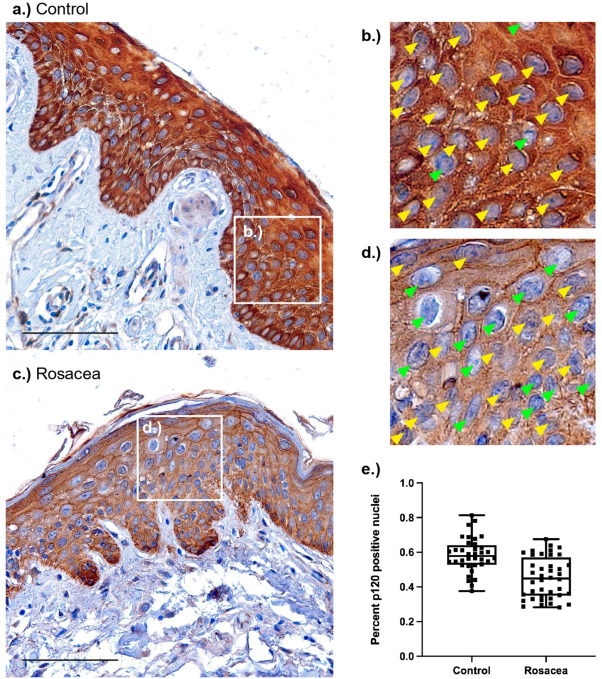
We and others implicated several proinflammatory pathways that are activated in rosacea. In particular, we identified increased activation of p38 and ERK in cutaneous rosacea specimens. Given the central role of this pathway in the pathogenesis of rosacea, we thus hypothesize that these drugs could be repurposed for the treatment of rosacea and other inflammatory cutaneous diseases. We propose to develop a treatment that maximizes efficacy with limited side effects. Topical application of these inhibitors is preferred to minimize systemic absorption and therefore avoid the adverse effects associated with oral intake. We successfully performed an initial Phase I trial to assess the safety and tolerability of topical trametinib in patients with rosacea (NCT05616923). Consistent with the goal of minimizing absorption, we did not detect any drug in circulation, indicating that patients are very unlikely to experience systemic adverse events. Furthermore, we did not identify any local adverse events, and the active medication was well-tolerated.
Our work is now focused on assessing efficacy of this topical medication in a larger dose escalation phase Ib/II trial, and to identify additional candidate mechanisms using a similar bedside-to-bench approach.