Retinopathies
We seek to understand the mechanisms of retinal vascular dysfunction with the goal of preventing the progression of blinding diseases.
Wet AMD and diabetic retinopathy (DR) account for vision impairment or blindness in approximately 11 million individuals worldwide. Retinopathy of prematurity (ROP) leads to approximately 20,000 blind babies each year, and the incidence appears to be increasing, at least in at-risk populations. A crucial role for the endothelium as a main disease driver and therapeutic target is demonstrated by the success of anti-VEGF biologics that can greatly slow down disease progression and prevent blindness in most patients. While anti-VEGF therapies quickly became the standard of care for DR and AMD, its efficacy and safety for ROP is still being investigated. A better understanding of the endothelial changes responsible for vascular dysfunction during the development of retinopathies may pave the way for improved therapies with sustained effect and reduced complications.
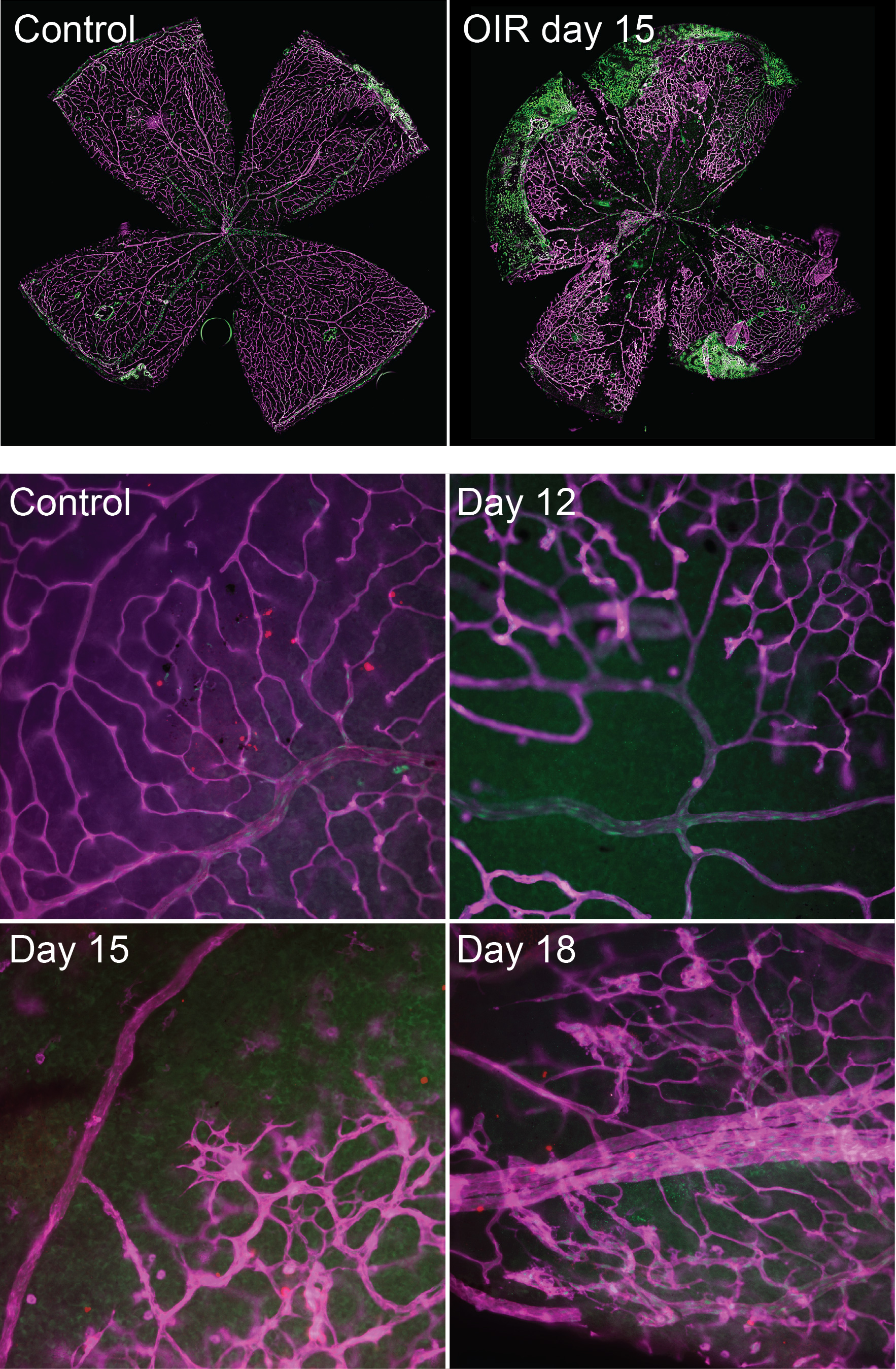
We study how the IL-6 pathway regulates the vascular injury in response to oxygen-induced retinopathy, an established mouse model of retinal pathological neovascularization. We are taking advantage of our experimental toolkit to design an approach enabling longitudinal studies of retinal perfusion and leak without the toxicity of multiple fluorescein injections. Understanding these mechanisms will allow for the design of specific therapeutic approaches to promote resolution of the retinal damage, stopping nerve loss and preventing further loss of vision.